
Guadalupe River Trout Fishing: Canyon Dam to Camp Huaco Springs
The cold tailwater below Canyon Lake is the southernmost trout river in the country, and it's heading into its best season in about a decade. Here's the river reach by reach, every rule that changes along the way, how to get on the water with or without a GRTU lease pass, and where to eat on either end of the day.
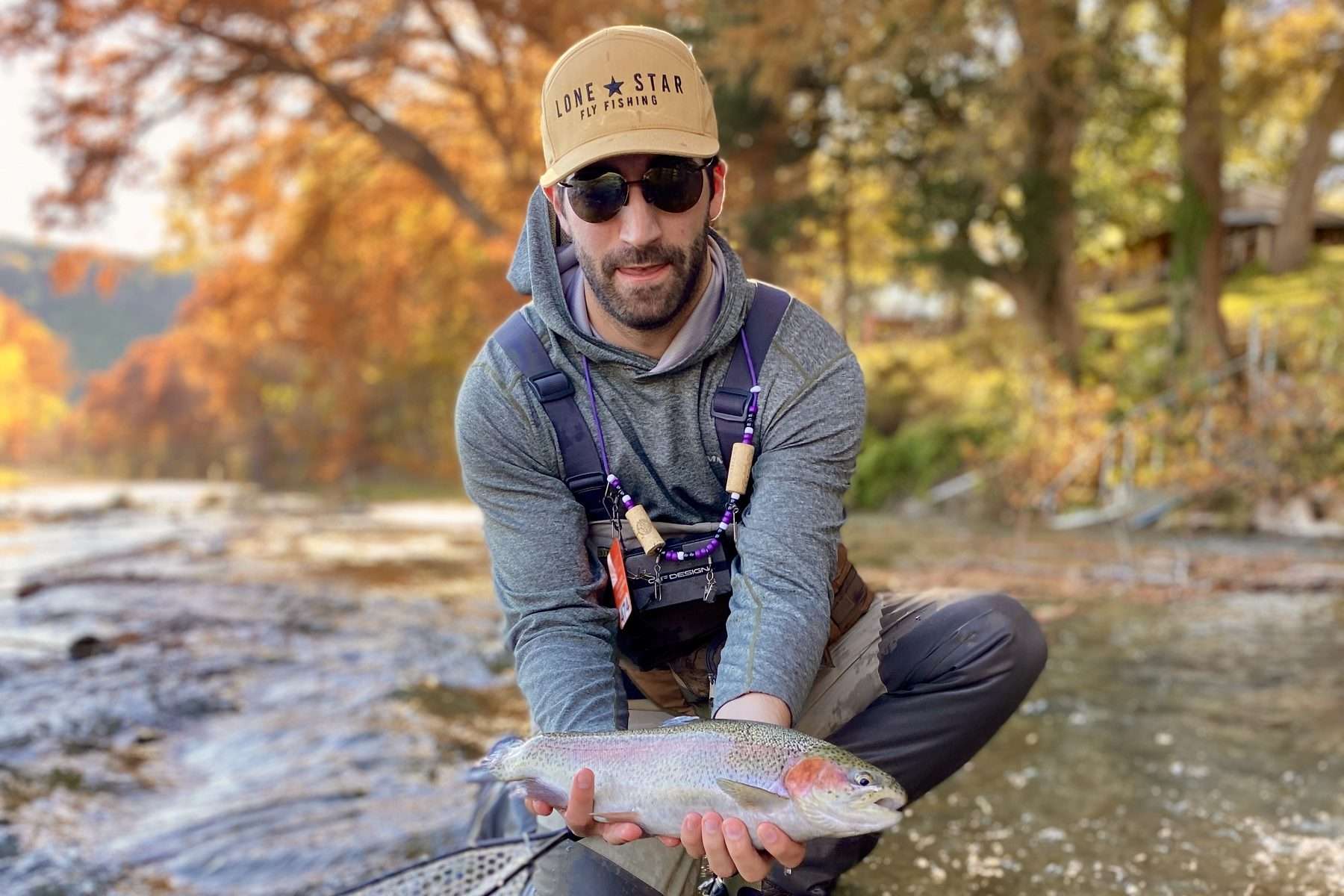
Cold water released from the bottom of Canyon Lake keeps the river below the dam cool enough for rainbow trout, and in good-flow years many of them survive the summer as holdovers. Texas Parks & Wildlife and Guadalupe River Trout Unlimited (GRTU) stock it every winter. Two special-regulation zones run from just below the dam to the second River Road crossing; above and below them, statewide trout rules apply. Free public access is limited to Guadalupe Park at the dam year-round and a TPWD no-fee lease at Camp Huaco Springs in winter. Most of the best wade water is reached through GRTU's Lease Access Program, an annual permit for Trout Unlimited members.
From River Road: anglers are already on the holdovers
On Monday, October 12, we drove River Road from Camp Huaco Springs up to the Horseshoe at Whitewater, and the waders were already out — anglers working riffles and tailouts for the trout that made it through the summer. That's the first sign of trout season on the Guadalupe, weeks before the first stocking truck shows up.
One reality check from the same afternoon: GRTU's live river sensors read about 66°F at miles 1.3 and 2.9 below the dam and above 70°F at miles 8.6 and 9.6. GRTU asks anglers to stop targeting trout once the water tops 68°F. In early fall, the holdover water worth fishing is the upper river, early in the day — the lower reaches won't cool down until the nights do.
Why the 2026–27 season looks like the best in years
The river's fortunes ride on Canyon Lake, and the lake is full. In GRTU's summer 2026 fisheries update, the chapter's vice president of fisheries, Jimbo Roberts, reported Canyon Lake slightly above conservation pool in August, with dam releases running roughly 150 to 300 cubic feet per second — enough to flush mud out of the river and keep it clearer. He called it the best shape the river and lake have been in for about ten years.
- More holdovers this fall. GRTU expects a larger holdover population than last year. Most will run around 13 to 16 inches — smaller than last year's holdovers because smaller fish were stocked last season — but well fed from GRTU's summer supplemental feeding, with a few big fish still in the mix.
- Possible wild-born browns. GRTU placed brown trout eggs in in-stream incubator boxes and expects small brown trout may start showing up in the upper river this fall. It's an expectation, not a confirmed result — but worth watching.
- Four GRTU stockings this season, totaling about 16,000 pounds of rainbow trout, on top of TPWD's winter program.
- A flow agreement up for renewal. The agreement between GRTU and the Guadalupe-Blanco River Authority that supports summer flows for trout expires December 31, 2026. GRTU reports renewal talks are friendly and expects a new agreement in much the same form.
Mark your calendar, too: Troutfest TX 27, GRTU's three-day fly-fishing and conservation expo, returns to New Braunfels February 19–21, 2027. Get Troutfest 2027 details and tickets.
The river reach by reach: Canyon Dam to Camp Huaco Springs
This is where most visiting anglers get tripped up. The rules change three times between the dam and New Braunfels, and the River Road crossings are numbered from the New Braunfels end — so the Fourth Crossing is the one closest to Sattler and the First Crossing is down by Camp Huaco Springs. Working downstream from the dam:
| Reach | Landmarks | Trout rules (rainbow & brown) |
|---|---|---|
| Dam to 800 yards below the release | Guadalupe Park (U.S. Army Corps of Engineers), with an ADA-accessible fishing pier near the power-plant outlet | Statewide rules: 5 trout per day, no minimum length |
| Trout Zone 1 800 yards below the dam to the easternmost FM 306 bridge | Sattler, the USGS Sattler gauge, the Horseshoe; ends at the bottom of the Horseshoe by Whitewater Sports | Artificial lures only. Protected 12–18" slot: keep trout 12" and under or 18" and over. Bag 5, only one 18" or longer |
| Trout Zone 2 Easternmost FM 306 bridge to the Second Crossing on River Road | Fourth Crossing, Third Crossing, Second Crossing | Artificial lures only. 18" minimum length, bag 1 |
| Below the Second Crossing | First Crossing, Camp Huaco Springs (4150 River Road) | Statewide rules: 5 trout per day, no minimum length |
Regulations change; confirm them in the TPWD Guadalupe River regulations before you keep a fish. Anglers 17 and older need a Texas fishing license with a freshwater endorsement.
Two ways onto the water: public access or a GRTU lease pass
Nearly every bank between the dam and New Braunfels is private, and many of those private banks are river camps, tubing outfitters, and rental homes. That leaves two realistic routes to good trout water — and which one you use depends on whether you're a Trout Unlimited member with a GRTU permit in hand.
Public access: no membership required
- Guadalupe Park, at the dam — year-round. Operated by the U.S. Army Corps of Engineers, with an ADA-accessible concrete fishing pier near the power-plant outlet. It's a long-standing TPWD stocking site, and it sits in the stretch above Zone 1, so statewide trout limits apply.
- Camp Huaco Springs — free in trout season through a TPWD lease. Sometimes spelled "Hueco," the camp at 4150 River Road (at the First Crossing) has nearly a half mile of bank along alternating pools and riffles, with a low-water dam at the upper end and a deep pool at the lower end. Under TPWD's no-fee lease, anglers can bank fish and launch non-motorized craft to fish. Statewide trout rules apply here. Last season the lease ran December 5, 2025 through March 7, 2026; TPWD typically announces the new season's lease dates in late November, so check the TPWD Guadalupe trout page before you go.
- Paid day access at river camps and outfitters. TPWD notes that many camps and resorts along this stretch let paying guests reach the river. Fees and fishing policies vary, so call first.
- A guided float. GRTU's own advice for anglers without a lease permit is to hire a local guide for a float trip; fly shops in the area can connect you.
Know the edge of the rules: on any access, stay off private banks you don't have permission to use. On a float, fish from your boat as you pass leased and private property rather than stepping ashore.
The GRTU Lease Access Program (the annual pass)
GRTU — the largest Trout Unlimited chapter in the country, with more than 5,500 members — leases paths to the river at 14 private locations for members who buy a Lease Access Program (LAP) permit. It is the single biggest reason serious wade anglers can fish this river at all.
What it costs and covers (2026–27):
- $200 permit, capped at 800 permits, first come, first served
- Season runs November 1, 2026 through October 31, 2027
- Some sites are annual (Nov. 1–Oct. 31); others are seasonal (Nov. 1–Mar. 31 only)
- Access is sunrise to sunset; parking only in each site's designated LAP spaces
- Guest and youth passes: $20 each, up to six of each per permit per year; guests and youth must fish with the permit holder
- Includes a digital and printable lease map, a members-only forum, and GRTU's stocking-drop notices, which go only to permit holders
The rules that matter most: catch-and-release only for every trout, using single-hook artificial flies and lures. No launching any watercraft from a lease. No pets. Wear your badge and display your parking permit. Fishing access only — no picnicking, camping, or fires. Professional guides can't use a LAP permit to bring clients in.
How to get one — and why timing matters right now. Enrollment is a four-step process with firm deadlines: your Trout Unlimited membership must be valid through the end of the permit season by July 31; you validate your membership with GRTU between August 5 and 31; you attend one mandatory online orientation between September 8 and 30; and eligible members get a purchase link when permits go on sale in early October. For the 2026–27 season, those deadlines have passed. Permits are limited to 800 and often sell out, so contact GRTU directly to ask whether any remain. If you missed it, fish public access this winter and get your TU membership squared away well before July 2027 for the next season. Full details are on GRTU's Lease Access Program page.
Public access vs. the GRTU pass at a glance
| Public access | GRTU Lease Access Program | |
|---|---|---|
| Cost | Free at Guadalupe Park and the TPWD Huaco lease; day fees at private camps | $200 permit plus Trout Unlimited membership |
| Where | The dam, plus Camp Huaco Springs in winter | 14 private sites, largely in the trophy water |
| Keep trout? | Yes, under TPWD rules for that reach | No — all trout released |
| Boats | Non-motorized launch allowed at TPWD leases | No launching from lease sites |
| Best for | First-timers, families, bank anglers, floats | Regular wade anglers chasing holdovers and GRTU's larger fish |
How to fish for holdover trout in the fall
Holdovers are the trout that survive a Texas summer in the river — stockers that grow, get wary, and fight like fish from a real trout stream. According to GRTU's Jimbo Roberts, most of the holdover population lives in the first seven miles below the dam, where the released water stays coldest. That's where October anglers should focus.
Before you rig up, check the water temperature on GRTU's live River Temps & Flow page. GRTU's guidance:
Practice catch and release whenever you can. Every holdover you release is a fish that can survive another summer and grow bigger for the next angler. Keep the trout in the water, use a rubber-mesh net, pinch your barbs, and let it go quickly. Even where TPWD rules let you keep a few, putting them back is what keeps this tailwater worth the drive.
When the lower river is too warm for trout, it isn't dead water: TPWD lists Guadalupe bass alongside rainbow and brown trout at the bottom of the Horseshoe, so a light rod and a small crawfish pattern can save the day.
How to fish for Guadalupe River trout: gear, rigs & flies
The Guadalupe is a tailwater, and tailwater trout eat small things drifting near the bottom. Most fish here are caught nymphing — two small flies under a strike indicator, weighted to tick along the bottom through riffles, runs, and the heads of pools. Dry-fly days happen but they're rare, and a streamer catches fewer fish, though the ones it catches tend to be bigger.
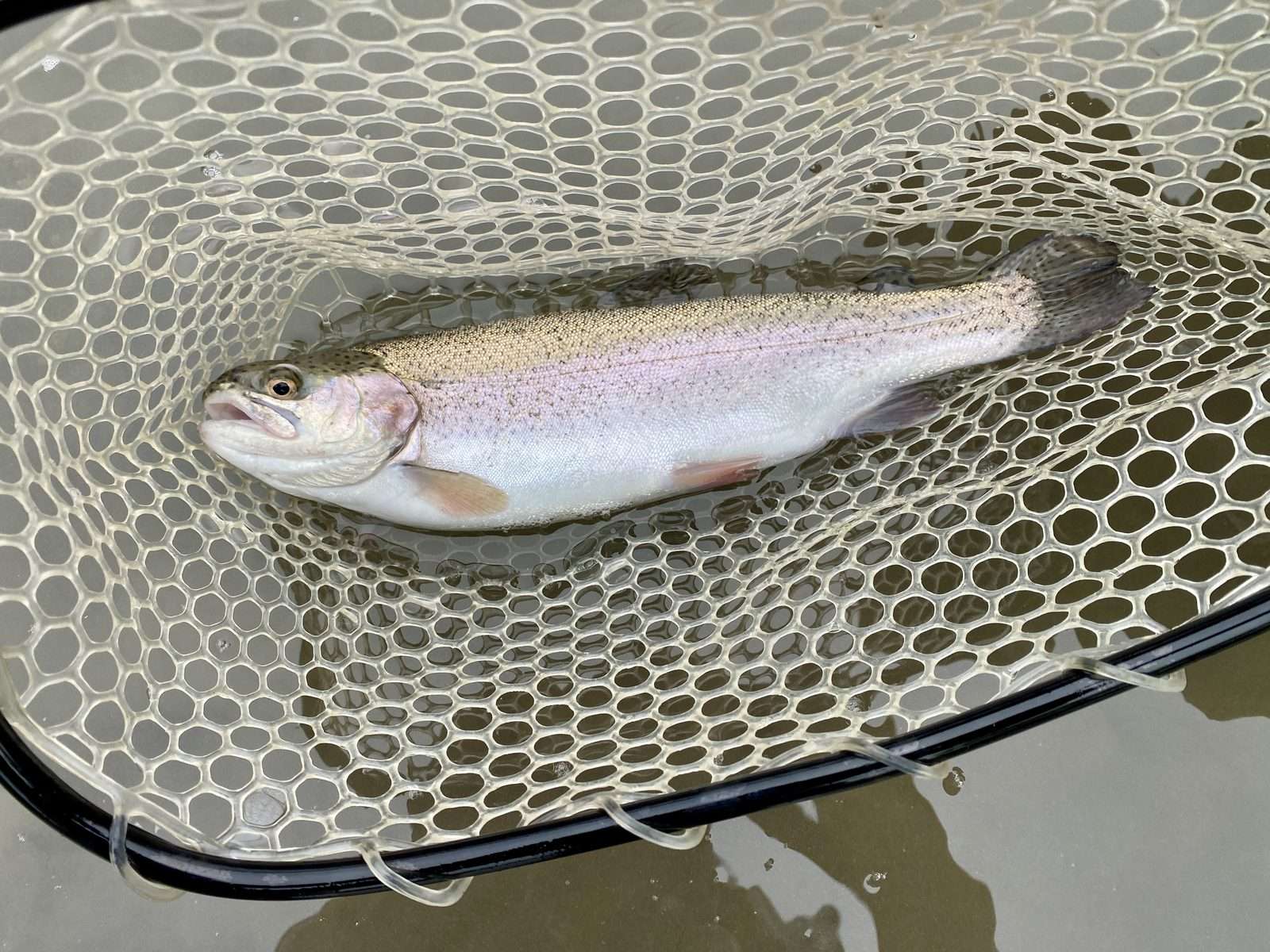
The rod: a 9-foot 5-weight
If you own one trout rod for this river, make it a 9-foot 5-weight with a weight-forward floating line. It's the setup local guide Alvin Dedeaux lists in his current Orvis fishing report for the Guadalupe, and it's the standard answer from nearly every shop that fishes it. The length helps you mend line and hold it off the swirling currents between you and the fish; the 5-weight is light enough for 12-inch stockers and strong enough to turn a 20-inch holdover or GRTU fish in heavy water. A 6-weight is a reasonable step up if you plan to throw a lot of streamers or fish high winter flows. A 4-weight is fun on stocker water but gets overmatched fast when releases are up.
Leader, tippet & terminal tackle
- Leader: a 9-foot 4X tapered leader to your first fly.
- Dropper: 16 to 20 inches of 5X tippet tied off the bend of the first fly to a smaller second fly. Fluorocarbon tippet is worth the extra cost on clear, low water.
- Strike indicator set roughly one and a half to two times the water depth above the top fly.
- Split shot (size 4 to 6) about 8 to 10 inches above the first fly. Add or remove until your flies tick bottom now and then; if you never snag, you're not deep enough.
- For streamers: a short, stout leader of 0X to 2X — big fish and heavy flies break light tippet.
Wading gear
- Breathable chest waders and wading boots with good traction. The Guadalupe's limestone ledges and cypress roots are slick.
- A wading belt, cinched tight, every time — GRTU's top safety advice, because it keeps waders from filling if you go in.
- A wading staff for crossings, especially when the Sattler gauge reads above 300 cfs.
- A rubber-mesh net and forceps so you can land trout fast and unhook them in the water. Pinching barbs makes releases quicker.
- A stream thermometer — the cheapest way to know when to stop fishing for trout and switch to bass.
The Guadalupe fly box
Carry a range of sizes, because the right fly changes with flows, clarity, and how long the fish have been in the river. Freshly stocked trout hit bright, bigger flies; holdovers and fish that have seen weeks of anglers want small and natural.
| Role | Flies | Sizes | When it shines |
|---|---|---|---|
| Lead nymph (top fly) | Beadhead Pheasant Tail, Beadhead Hare's Ear, Pat's Rubber Legs, San Juan Worm | Pheasant Tail & Hare's Ear 14–18; Rubber Legs 8–12; San Juan Worm 12–14 | All season; the worm after a flow bump or a little color in the water |
| Egg | Micro Egg (orange, peach, chartreuse) | 14–18 | Stocking season — new fish key on eggs and bright colors |
| Dropper (bottom fly) | Black Zebra Midge, Blood Midge, JuJuBee Midge, WD-40, Rainbow Warrior | 18–22 | Holdovers and pressured fish, low and clear water, cold mornings |
| Streamer | Black or olive Woolly Bugger (beadhead), Rubber Bugger, Autumn Splendor | 6–10 | Overcast days, low light, high flows — and the occasional big trout or striper |
| Dry flies | Parachute Adams, small Blue-Winged Olive, Griffith's Gnat | 18–22 | Rare, but worth carrying for calm, gray winter afternoons when fish rise to midges and mayflies |
The starter rig most anglers should tie on first: a size 16 beadhead Pheasant Tail or an orange Micro Egg up top, a size 20 black Zebra Midge on the dropper, split shot above, and an indicator set at about one and a half times the depth. Fish it through the seams where fast water meets slow. If nothing happens in 20 minutes, change the bottom fly first, then the depth.
On a GRTU lease: every trout goes back, and flies and lures must be single-hook. Treble hooks are out.
Euro nymphing and streamers
Plenty of Guadalupe regulars skip the indicator and Euro nymph — a long, light rod (often a 10-foot 3- or 4-weight), a thin sighter line, and heavy tungsten-bead jigs fished tight. It shines in the pocket water and fast runs. If you'd rather hunt a big fish, swing and strip a dark streamer through deep pools at first and last light. It's also how anglers target the striped bass that wash out of Canyon Lake after big releases.
Fly shops near the Guadalupe trout water
Local fly shops know what the fish ate yesterday, which flows are wadeable, and which flies are working this week. Stop in before your first trip — it's the fastest shortcut on the river.
Gruene Outfitters →
A fly fishing and outdoor shop in the Gruene Historic District at 1629 Hunter Road — fly tackle, flies, and outdoor wear, plus recommendations for local guides. (830) 625-4440.
Fly Shop & Guides · River RoadRio Anglers →
A streamside fly shop at 14130 River Road, just above the Fourth Crossing bridge, with guided float and wade trips on the Guadalupe. Gear and flies are provided on trips. (830) 227-2450.
Action Angler has closed. The longtime fly shop and guide service on River Road is no longer operating as a shop. Angler parking at its River Road location (9751 River Road) is still available on a pay-to-park basis — Texas Home Talk confirmed this with the business by phone in October 2026. You pay on site by scanning a QR code. Parking is enforced, and unpaid vehicles get towed, so pay before you head to the water. Fish only where you have permission to be on the bank.
When the stocking trucks come
Texas Parks & Wildlife runs its statewide winter trout program from late November into early March. Last season TPWD scheduled 18,471 rainbow trout for the Canyon Tailrace, released at Guadalupe Park, Whitewater Camp, the Fourth and Third Crossings, and Camp Huaco Springs. TPWD's fish average roughly pan size and are meant to be harvested. GRTU's four stockings add bigger fish on top of that.
TPWD usually posts the winter Canyon Tailrace stocking dates in late fall. Check the TPWD trout stocking schedule before you go.
Check flows before you go — and wade carefully
Everything on this river depends on what Canyon Dam is releasing. Use the USGS Guadalupe River at Sattler gauge — the one that reflects the dam release — rather than gauges above the lake, which only show what's flowing in. The Third Crossing gauge is useful for the middle of the run.
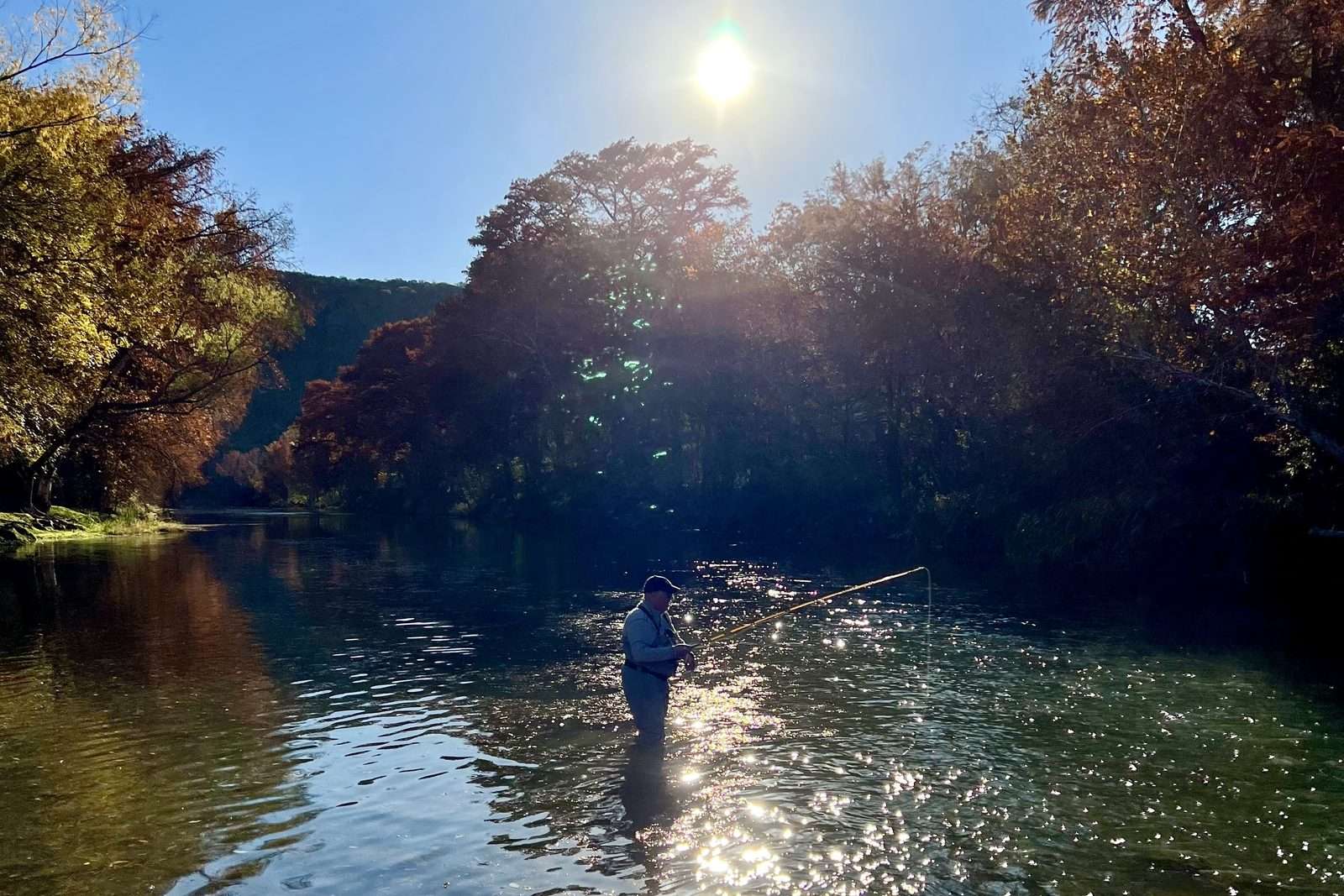
- Above about 300 cfs, GRTU says wading gets increasingly difficult.
- Above about 500 cfs, crossing the river is only possible in certain spots.
- Always: fish with a buddy, carry a wading staff, and cinch a wading belt so your waders can't fill if you go down. GRTU's River Safety page covers safe wading and floating levels.
Caution: watch for rutted limestone. Parts of the Guadalupe's bottom are cut with deep ruts and ledges in the limestone that are hard to see through moving water. Many an unsuspecting angler has tripped or stepped into one and taken a nasty fall. In December and January, when freezing temperatures are common, an unexpected dip in the Guad can be quite unpleasant. Shuffle your feet, probe ahead with a wading staff, and keep a dry change of clothes in the truck.
How far is the Guadalupe tailwater?
Approximate one-way drive times to Sattler and Canyon Dam:
- New Braunfels — about 25 minutes
- San Marcos — about 40 minutes
- San Antonio — about 55 minutes
- Austin — about 1 hour
Camp Huaco Springs sits at the New Braunfels end of River Road, so it's closer for anyone coming up from I-35.
Fish, then eat: a two-meal bookend
Before the river — Smokeshow Coffee Co., Canyon Lake. Most anglers start their day up near the dam, and Smokeshow at 1642 FM 2673 in Canyon Lake is open early, before most folks get on the water. Grab a coffee and a pastry on the way down to River Road. Check their Facebook page for current hours.
After the river — the Gristmill, Gruene. The Gristmill River Restaurant & Bar has been serving since 1977 in the ruins of an 1878 cotton gin on the bluff above the Guadalupe at 1287 Gruene Road. It opens at 11 a.m. daily, a few minutes downstream of Camp Huaco Springs — the same river, now with chicken-fried steak.
Thinking about living near the trout water?
Canyon Lake →
Living above the dam that makes the trout water possible — neighborhoods, lake life, and the Sattler side of the river.
Community GuideNew Braunfels →
The river town at the bottom of the tailwater, with River Road and Gruene minutes from home.
Featured Partners
Paid featured placements, separate from the editorial content above.
Your shop here
Reach anglers planning their Guadalupe trout season. One featured outfitter slot.
Your business here
Reach relocation-minded readers and Central Texas anglers. Limited featured partner slots.
The Guadalupe is one river of many
Trout below Canyon Dam is the cold-water chapter of the bigger Central Texas fishing story. For Guadalupe bass, white bass, catfish, and the lakes, start with our pillar guide, Fishing in Central Texas, or head north and west to fly fishing the Llano River for native Guadalupe bass in granite water.
Planning a non-fishing day on the water? See our guide to the best Hill Country rivers for tubing and swimming.
Guadalupe River trout fishing: frequently asked questions
Where can I trout fish on the Guadalupe River without a GRTU lease pass?
Free public access is available year-round at Guadalupe Park, the U.S. Army Corps of Engineers site at Canyon Dam with an accessible fishing pier, and during trout season at Camp Huaco Springs on River Road through a Texas Parks and Wildlife no-fee lease. Many river camps and outfitters also sell day access, and a guided float trip is another way to reach water that is otherwise lined with private property.
What are the trout regulations on the Guadalupe River below Canyon Dam?
Two special zones apply to rainbow and brown trout, and both are artificial lures only. Trout Zone 1 runs from 800 yards below the dam to the easternmost FM 306 bridge, with a protected 12 to 18 inch slot and a bag of five, only one 18 inches or longer. Trout Zone 2 runs from that bridge to the second River Road crossing, with an 18 inch minimum and a bag of one. Outside those zones, statewide rules allow five trout with no minimum length. Confirm current rules with Texas Parks and Wildlife.
How do I join the GRTU Lease Access Program?
You need a Trout Unlimited membership that stays valid through the end of the permit season, then you complete GRTU's four-step process: renew by July 31, validate your membership in August, attend one online orientation in September, and buy a permit when sales open in early October. Permits cost 200 dollars, are limited to 800, and cover 14 private river access sites from November 1 through October 31. All trout caught under the program must be released.
Are there trout in the Guadalupe River in October?
Yes. In good-flow years, holdover trout survive the summer, mostly in the first several miles below Canyon Dam where the released water stays coldest. Fall is also when water temperatures matter most: Guadalupe River Trout Unlimited recommends stopping trout fishing once the water is above 68 degrees, so check its live temperature sensors and focus on the upper river early in the day.
What fly rod and flies do I need for Guadalupe River trout?
A 9-foot 5-weight fly rod with a floating line is the standard setup for the Guadalupe tailwater. Most trout are caught nymphing two flies under a strike indicator: a size 14 to 18 beadhead Pheasant Tail, Hare's Ear, or orange Micro Egg on top, and a size 18 to 22 Zebra Midge or similar small midge on a 5X dropper. Carry dark Woolly Buggers in sizes 6 to 10 for low light and high flows, and stop in at a local fly shop such as Gruene Outfitters or Rio Anglers for what is working that week.
When does trout stocking start on the Guadalupe River?
Texas Parks and Wildlife runs its winter trout program from late November into early March, and the Canyon Tailrace below the dam typically gets its rainbows in weekly releases beginning in December. Guadalupe River Trout Unlimited adds larger fish during the cooler months, with four stockings planned for the 2026 to 2027 season. Check the TPWD trout stocking schedule for current dates before you go.