Updated August 26, 2026

The corridor's most affordable market — and its most buyer-favorable
San Marcos is a city of approximately 77,830 in Hays County, on I-35 roughly halfway between Austin (about 30 miles north) and San Antonio (about 50 miles south). Home to Texas State University and the spring-fed San Marcos River, it is the Hays County seat. Most addresses are served by San Marcos CISD; the Blanco Vista area in the north is served by Hays CISD. As of mid-2026 it is the softest, most buyer-favorable housing market on the Austin–San Antonio corridor.
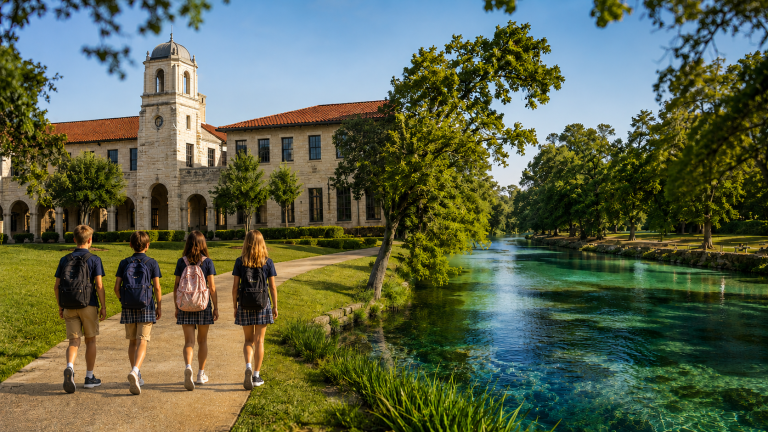
San Marcos grew up around the San Marcos Springs, one of the largest spring systems in the Southwest and among the oldest continually inhabited sites in North America. The river that rises there stays a constant 72 degrees year-round and anchors the city's identity — Sewell Park, the university, and the summer float culture all trace back to it.
Texas State University is the defining institution. Its enrollment of roughly 40,000 students shapes the city's rental market, its median age (about 25), and several headline statistics — the sub-31% homeownership rate and the ~27% poverty figure are university artifacts, not a picture of the family-buyer submarket in Blanco Vista, Kissing Tree, or La Cima.
The population climbed from 44,894 in 2010 to roughly 77,830 by 2025 — a 14.9% jump just since the 2020 census. Growth has pushed master-planned development north toward Kyle (Blanco Vista) and south and west (La Cima, Kissing Tree), even as the resale market has cooled sharply in 2026.
Three buyers dominate: relocation buyers moving to the corridor for the price gap, sellers timing a soft market, and Texas State families and staff who want to stay near campus. All three are served by the same fact — right now, San Marcos gives buyers more leverage than it has in years.
1 · School district. San Marcos is split. SMCISD (rated C) covers most of the city; the Blanco Vista area is Hays CISD (rated B). The same corridor can switch districts — and inside SMCISD the elementary zone swings from A to D. Verify at the address.
2 · Flood zone. San Marcos sits at the Blanco/San Marcos river confluence and has a documented flood history. About 18% of properties carry severe 30-year flood risk. Check the FEMA map and NFIP requirement before you offer.
3 · PID special assessment. La Cima sits in a Public Improvement District, so its lots carry an annual assessment on top of ordinary property taxes — confirm the current installment on the specific lot. Blanco Vista, Kissing Tree and Heritage do not carry a MUD or PID. Verify the parcel's actual rate either way.
Weighing private options? See our San Marcos private schools guide.
San Marcos is a renter-majority city — only about 31% of homes are owner-occupied, a Texas State effect. But for buyers, the 2026 market is unusually favorable: the median sale price is down 7.7% year over year, nearly half of all listings have cut price, and homes sit a median of 77 days. Combined property-tax rates run roughly 2.0–2.2% of assessed value, with MUD/PID overlays stacking higher in master-planned areas.
The real risk isn't timing a falling market — it's buying in the wrong district or elementary zone. SMCISD (C) and Hays CISD (B) split the city, and inside SMCISD the elementary rating swings from A to D block to block. Run the rent-versus-own math against your actual district, zone, and parcel tax rate before you commit — you can look up the exact rate and any special assessment for a specific address at the Hays County Tax Office. For the bigger picture, listen to The Unfair Advantage: Central Texas Property Taxes.
Where to Live
La Cima
Hill Country master-planned community on the west side, zoned to Hernandez Elem (A), Miller MS (B) and San Marcos HS (C). Wimberley ISD is an application-based transfer option, not the zoned district. New construction, trails, amenity center; adjacent to San Marcos Academy (private K-12). Note: La Cima sits in a Public Improvement District (PID), so lots carry an annual special assessment on top of ordinary property taxes — a meaningful add to the effective rate that varies by lot type and rises over the assessment schedule. Look up the current installment for a specific lot through the City of San Marcos PID page and its administrator, P3Works, before you offer.
Blanco Vista
The one San Marcos area in the higher-rated Hays CISD (district B). Elementary is Blanco Vista Elem (B). Master-planned, on the north edge toward Kyle near Bucee's and Five Mile Dam. [VERIFY: middle-school feeder + high-school campus — Hays vs. Lehman, both B-rated]
Kissing Tree
Gated 55+ active-adult community (age-restricted, so school zoning does not apply). Golf, resort amenities, lock-and-leave living aimed at downsizers and relocation retirees. Newer resale and new-construction inventory.
Heritage
Newer subdivision in the SMCISD footprint with active resale turnover. Elementary zoning varies by street between Crockett and Hernandez — but both rate A, so Heritage buyers land in an A-rated elementary zone either way. All Heritage students feed Doris Miller MS (B) and San Marcos HS (C).
Downtown & Blanco Gardens
The historic core around The Square, Texas State, and the river. Zoned to Crockett Elem (A) per the SMCISD attendance map. Older housing stock, walkability, university proximity; strong for buyers who want to be near campus and the river.
TRACE
Master-planned community in south San Marcos, adjacent to I-35, with an onsite elementary. Feeds Rodriguez Elem, Doris Miller MS (B) and San Marcos HS (C). One thing the builder's marketing won't tell you: Rodriguez Elem rates C on TEA — a step below the A-rated Crockett/Hernandez zones elsewhere in SMCISD, so weigh the zoned elementary if schools drive your decision. Note: TRACE sits in a Public Improvement District (PID) — per the City of San Marcos 2026 service plan, lots carry an annual PID assessment of roughly $530–$720 (by lot type, due Jan 31, 2027) on top of ordinary property taxes, adjusting yearly. Confirm the specific lot via the City of San Marcos PID page and P3Works before you offer.
The Reference Desk
1 · A buyer's market, plainly. Over the three months ending June 2026, San Marcos homes sold at a median of $313,829 — down 7.7% year over year — on 227 sales, with a median 77 days on market. Nearly half of listings (about 50%) had a price cut, and homes closed around 4% under list. This is the softest, most buyer-favorable market on the Austin–San Antonio corridor; for comparison, New Braunfels and Austin both score higher on competition.
Source. Redfin city-level data for San Marcos, three months ending June 2026. Median sale price per square foot was $169, down about 15% year over year. Monthly figures move and submarkets vary widely — Blanco Vista, Kissing Tree and La Cima each price on their own curve — so verify at the address.
2 · The university distortion. Texas State's ~40,000 students drive several headline numbers that mislead family buyers: a ~31% homeownership rate, a ~25 median age, and a ~27% poverty figure. These describe a student-heavy rental city, not the buyer submarket in the master-planned communities. Read the family-market signal from the neighborhood, not the citywide stat.
3 · The school-zone swing. The single biggest school-quality variable in San Marcos isn't district — it's the SMCISD elementary zone. Crockett and Hernandez rate A; Bowie, DeZavala, Mendez and Travis rate D. Two homes a few blocks apart can zone to very different campuses. Blanco Vista buyers get the higher-rated Hays CISD (B) instead.
Typical housing stock. Master-planned new construction (La Cima, Blanco Vista, Kissing Tree), historic-core homes near The Square and Texas State, and a deep rental base tied to the university.
Which county is San Marcos in? See our Central Texas towns by county, ZIP code and population guide.
Spine is I-35 north–south. San Marcos is one of the few corridor cities with passenger rail: Amtrak's Texas Eagle stops here, and the San Marcos Regional Airport (HYI) serves general aviation. The university runs the Bobcat Tram; the city has a fixed-route bus system. Peak I-35 congestion through town is real — budget extra either direction at rush hour.
San Marcos anchors the Austin–San Antonio logistics corridor and has a large retail-employment base tied to the two outlet malls. The university and the hospital are the stable year-round anchors; retail and hospitality swing with the school calendar and tubing season.
Christus Santa Rosa is the in-town hospital; major medical centers in Austin and San Antonio are both under an hour. Pharmacies (H-E-B, CVS, Walgreens), urgent care, and veterinary services are well covered in town, with specialty care available in either metro.
Multiple H-E-B locations plus Walmart Supercenter anchor everyday grocery. San Marcos is a regional shopping destination thanks to two large outlet malls — San Marcos Premium Outlets and Tanger Outlets — that draw shoppers from both metros. Downtown around The Square carries local boutiques, coffee, and restaurants.
City-contracted residential trash, recycling and bulk pickup inside city limits, scheduled by zone. Areas outside the city are on private contract. Look up your collection zone and day on the City of San Marcos portal.
Dining clusters downtown around The Square and along the river, with a strong college-town mix of casual, late-night, and local independents. The river culture drives a seasonal patio scene; Cheatham Street Warehouse is a landmark Texas-music venue with deep songwriter history. Verify hours during summer tubing season, when downtown and the river district get busy.
The river and its parks — Sewell Park, Rio Vista Park, City Park — anchor outdoor life, along with the Purgatory Creek Natural Area and the broader San Marcos greenbelt trail system. Boarding, daycare and vet services are well served in town.
Inside city limits, San Marcos Electric Utility is the municipal provider; water and wastewater are city services. Outside the city, the electric provider depends on address (PEC and others). Gas, where available, is via the local provider; internet leans Spectrum and Grande/other fiber. Verify at the specific address — provider changes at the city limit line.
New Texas residents transfer registration and license within 90 days. The Hays County Tax Office in San Marcos handles vehicle registration; Texas DPS runs a driver license office in town. County records and courts sit at the Hays County Government Center; property records at the Hays Central Appraisal District. City of San Marcos handles permits.
San Marcos has an identity most fast-growing Texas cities lack: a genuine college-town-plus-river-town character, built on the spring-fed San Marcos River, Texas State University, and a downtown Square that predates the interstate. The river is the throughline — recreation, culture, and the reason the city exists.
The San Marcos River
Spring-fed and a constant 72°F year-round, rising from the San Marcos Springs at the north end of town. Sewell Park, Rio Vista, and the summer float culture all center on it. One of the oldest continually inhabited sites in North America.
Texas State University
Roughly 40,000 students give San Marcos its energy, its music scene, and its rental market. The Bobcats, the Bobcat Tram, and a campus that climbs the hill above the river define the north side of town.
The Square & downtown
The historic courthouse Square anchors downtown dining, coffee, and nightlife, with local boutiques and a walkable core that predates I-35. The center of gravity for residents who want to be near campus and the river.
Cheatham Street Warehouse
A landmark Texas-music venue with a deep songwriter history — part of what gives San Marcos an outsized live-music footprint for a city its size, alongside the broader Central Texas scene.
Outlet shopping
San Marcos Premium Outlets and Tanger Outlets make the city a regional retail destination, pulling shoppers off I-35 from both Austin and San Antonio — a meaningful piece of the local economy.
Parks & natural areas
Purgatory Creek Natural Area, Spring Lake and the Meadows Center, and the greenbelt trail system give San Marcos a strong outdoor base beyond the river itself — hiking, paddling, and glass-bottom-boat tours over the springs.
Are you a San Marcos resident? Share your story →
Homebuyer note: Before buying in San Marcos, review our Texas foundation problems guide for common warning signs.
San Marcos Preferred Partners
Trusted local professionals hand-selected for new and relocating residents. Every partner listed has been reviewed by our team.
Paid placement. This featured mortgage position is a disclosed advertising placement held by Edge Home Finance Corporation.
Steve Tomaselli — Edge Home Finance Corporation
Relocating to San Marcos? Steve Tomaselli is one of the most experienced mortgage professionals serving Central Texas and the I-35 corridor, with 33 years in the business and a deep specialty helping out-of-state buyers — including Texas State University faculty, staff, and relocation families moving into Hays County. As the founder of TexasHomeTalk.com, Steve understands San Marcos inside and out — from the San Marcos and Hays CISD boundary nuances in La Cima, Blanco Vista, Kissing Tree, Heritage, and TRACE, to the river and floodplain dynamics along the Blanco River, to the new-construction game in the city’s expanding corridors. He offers the full range of loan programs — conventional, FHA, VA, jumbo, investor DSCR, bank statement, and buydown options — with the kind of plain-English communication and responsiveness that relocation buyers and first-time homeowners both need. Whether you’re buying your first Texas home between Austin and San Antonio, moving up between San Marcos and New Braunfels, or building an investment portfolio near Texas State University, Steve is the guy who picks up the phone.