Updated August 31, 2026
Moving to Dripping Springs: one name, three tax structures, three school districts
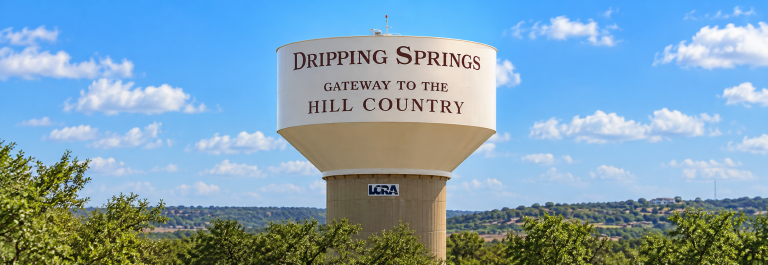
Dripping Springs is an incorporated city of roughly 11,167 in Hays County, on US-290 about 23 miles west of Austin — the self-described "Gateway to the Hill Country." Most people who say they live in "Dripping Springs," though, live in its very large extraterritorial jurisdiction (ETJ), estimated near 30,000, outside city limits. That city-versus-ETJ line quietly governs your taxes, your utilities, and even which school district you land in, so the address matters far more than the mailing city.
Incorporated in 1981, Dripping Springs sits in the Trinity Aquifer country west of Austin and bills itself the "Gateway to the Hill Country." It's a winery, distillery and brewery destination, an International Dark Sky Community since 2014, and the trailhead for Hamilton Pool and the Pedernales — a lifestyle market first, a commuter market second.
The city limits hold only about 11,167 people (U.S. Census, 2025 estimate), but the city's own figures put the surrounding ETJ near 30,000. ETJ property owners pay no city property tax and often sit on well and septic rather than city utilities — the single biggest thing buyers misunderstand about "Dripping Springs."
The city's population rose about 126% from its 2020 base to the 2025 estimate, and master-planned communities — Headwaters, Caliterra, Highpointe, Belterra — have driven most of that growth, each stacking its own special taxing district on top of the base bill.
Three buyer profiles dominate: relocation buyers from California and out of state chasing Hill Country land and Austin access; Austin-metro buyers priced out of the city; and current residents moving up from older-town homes into new master-planned product.
1 · School district. A "Dripping Springs 78619" address can feed Dripping Springs ISD, Hays CISD, or Wimberley ISD. Never assume — verify the parcel at txschools.gov.
2 · The special-district line. A MUD, WCID, or Development District can add roughly $3,400–$7,400 a year. Confirm which district — if any — is on the specific parcel.
3 · Water & wastewater. City sewer, a developer/MUD system, a water supply corporation, or well-and-septic — it varies hard by city-vs-ETJ. Confirm the source before you write.
Effective property-tax rates here run roughly 1.3% on unplatted acreage to about 2.5% inside a master-planned Development District — and that spread is driven almost entirely by the special-district line, not the school or county rate. On an $800K–$900K home that difference is close to $10,000 a year, so the district on the parcel changes your payment more than the price does.
The real risk isn't timing the market — 78620 sale prices are actually down about 14.5% year over year — it's buying in the wrong part of a city-plus-ETJ market where school district, tax rate, and utilities can all flip from one tract to the next. Run the true monthly math against the specific parcel before you commit.
Where to Live
Caliterra
Nature-centered master plan along Onion Creek, ~250+ acres of green space. Carries Hays County Development District #1 — the highest special-district load we found, pushing the effective rate near 2.5%. Homes roughly $500K–$2M.
Headwaters at Barton Creek
Conservation-minded, ~1,000 acres, modern-farmhouse product, lifestyle director and on-site elementary. Carries the Headwaters Municipal Utility District — a verified 2025 parcel ran ~2.29% effective. Roughly $600K–$1.5M.
Belterra
One of the largest and most established communities (78737), resort-style amenities, its own DSISD elementary. Split between two water districts — WCID #1 (~1.85–1.90%) and WCID #2 (~2.05–2.08%) — so confirm which section.
Highpointe
Gated ~740-acre master plan of roughly 1,000 upscale homes, resident club with gym, pools and courts. Carries Hays County MUD No. 5; a verified 2025 parcel ran ~1.85% effective — near the low end for a MUD community.
Historic Dripping Springs
Older homes inside the city limits around Mercer Street. No MUD or WCID, but a City of Dripping Springs tax line instead — a verified 2025 parcel still ran ~1.86% effective. Walkable to downtown dining and shops.
Driftwood & Hill Country acreage
Large-lot and ranch tracts (78619 and the ETJ) with no special district — the lowest effective rates, roughly 1.3–1.5% — but usually well and septic. Critically, the school district varies: DSISD, Hays CISD, or Wimberley ISD.
The Reference Desk
1 · Three ZIPs, one name. "Dripping Springs" is not a single market. For the three months ending June 2026, Redfin put the median sale price at about $570,000 in 78620 (down 14.5% year over year), $882,000 in 78737 (up 3.8%), and $1.09M in 78619 (down 5.1%). Same broad area, wildly different price tiers — and the direction of travel differs too. Monthly figures move and submarkets vary; verify at the address.
2 · The Census number is different on purpose. The U.S. Census ACS (2020–2024) lists a median home value near $635,600 for the city. That's a five-year blended statistic for owned homes, not a current sale price — useful context, but not what you'll pay today. Don't let anyone hand you one "Dripping Springs price."
3 · The tax range is real, and it's the special district. Across verified 2025 Hays County parcels, effective property-tax rates run from roughly 1.3% on unplatted acreage (county + school + ESD only) to about 2.54% in Caliterra's Hays County Development District #1. In between: Highpointe (MUD No. 5) ~1.85%, Belterra WCID #1 ~1.85–1.90% and WCID #2 ~2.05–2.08%, an in-city home ~1.86%, and Headwaters MUD ~2.29%. The school and county lines are nearly constant — the special-district line is what moves the bill.
4 · Two myths worth killing. Belterra is often sold as the "no-MUD value play" — it isn't; it carries a Water Control & Improvement District. And Caliterra's rate, sometimes quoted as a "brutal 2.7%," is about 2.54% on a verified parcel. Always confirm the district and rate on the specific parcel — the CAD record is the source of truth.
Which county is Dripping Springs in? See our Central Texas towns by county, ZIP code and population guide.
Tax figures are verified individual 2025 parcels from the Hays County Tax Office, shown as representative examples; assessed values and exemptions vary parcel to parcel.
The spine is US-290, running east to Austin and west to Johnson City, with RR 12 north to Wimberley and south toward San Marcos. This is a car-first market: no commuter rail, limited transit, and mean travel time to work of 27.4 minutes (U.S. Census, 2020–2024). Rideshare works in and around town; count on driving for nearly everything.
Dripping Springs bills itself as a brewery, distillery and winery destination, and the "wedding capital of Texas" — hospitality and tourism are real local employers. Many working residents commute toward Austin. Income and education figures are U.S. Census QuickFacts (2020–2024, in 2024 dollars).
Full-service hospitals are concentrated in the Austin metro to the east and in San Marcos to the south; primary care, dentistry, and urgent care are available in and around town. For specialists and emergency care, most residents orient toward Austin. Confirm your plan's in-network facilities before you rely on the nearest option.
An H-E-B and a Home Depot sit near the US-290 and RR 12 junction, the everyday retail hub in town. For bigger shopping trips, the Hill Country Galleria in Bee Cave is about 25 minutes east, and the full Austin retail market is 35–45 minutes out. Mercer Street downtown carries boutiques, tasting rooms and local shops.
This is the one to check first. Inside the city, homes may be on city water and wastewater; in the ETJ and on acreage, expect a water supply corporation, a MUD system, or private well and septic. The city has a documented, contested history around a wastewater discharge permit for Onion Creek. Confirm your specific parcel's water source and wastewater method before you buy. For background, listen to Central Texas Water Aquifers: Your Water Is a Rock and read Central Texas Water: Droughts, Floods and the Forecast.
Dripping Springs' identity is built on its tasting rooms — it's a nationally known winery, distillery and brewery destination, with Dripping Springs Vodka, Treaty Oak, and a long roster of Hill Country wineries and breweries along US-290 and the back roads. Downtown Mercer Street anchors the local restaurant scene. Verify hours seasonally; weekend tourism stretches capacity.
Hamilton Pool Preserve (reservations required, just over the line in Travis County), Pedernales Falls State Park, Reimers Ranch, and Dark Sky stargazing — Dripping Springs was named an International Dark Sky Community in 2014. The Hill Country landscape is the product being sold here.
Electric, water, and internet providers vary by exact location across the city and ETJ. Master-planned communities often route water and wastewater through their MUD or WCID; acreage typically means well, septic, and propane. Internet ranges from fiber in newer communities to fixed-wireless or satellite on rural tracts. Verify at the specific address — do not assume from a neighbor.
Dripping Springs is in Hays County; the county seat and most county offices are in San Marcos. Property records and tax data are at the Hays Central Appraisal District and Hays County Tax Office. The City of Dripping Springs handles permits and planning inside the city and, for some matters, its ETJ.
Dripping Springs sells a specific version of the Hill Country: dark skies, spring-fed swimming holes, a downtown that predates the sprawl, and a tasting-room economy that turned ranch land into a weekend destination. The lifestyle is the reason most relocation buyers are here — the commute math comes second.
Gateway to the Hill Country
The town's own motto, and an accurate one — US-290 west of Dripping Springs opens into wineries, ranch land, and the Pedernales. It's the last real town before the open Hill Country begins. For what the budget gets you, see What $400K buys you in the Texas Hill Country.
Dark Sky Community
Named an International Dark Sky Community in 2014 — the first in Texas — thanks to a 2011 lighting ordinance. Stargazing is a genuine amenity here, and one reason acreage buyers cite for choosing the ETJ over the city.
Wine, spirits & beer trail
A nationally recognized winery, distillery and brewery destination — Dripping Springs Vodka, Treaty Oak, and dozens of tasting rooms along US-290. The weekend tourism economy is a real local employer.
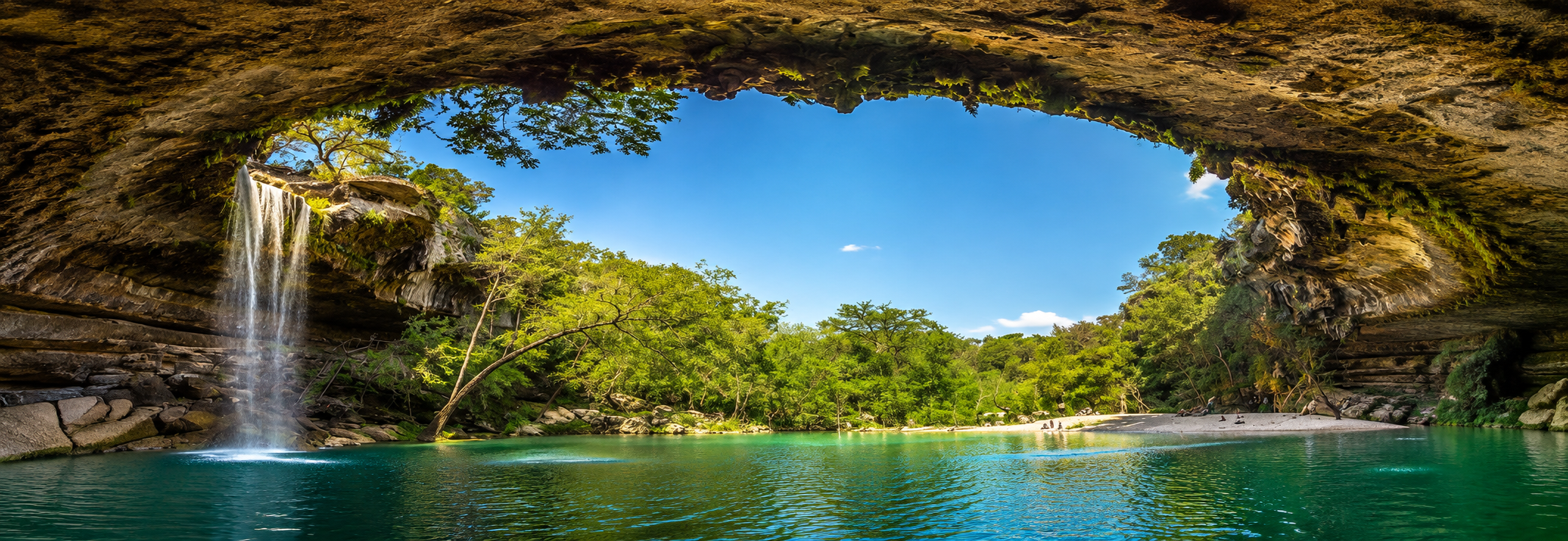
Hamilton Pool & the Pedernales
Hamilton Pool Preserve's collapsed grotto and waterfall (reservations required) and Pedernales Falls State Park are minutes away. Spring-fed swimming and Hill Country hiking are part of the daily-life pitch.
Mercer Street downtown
The historic core — restored storefronts, tasting rooms, restaurants, and community events. A walkable downtown is rare in Hill Country towns this size, and it anchors the in-city premium.
Wedding capital of Texas
Dripping Springs markets itself as the wedding capital of Texas, with a dense cluster of Hill Country venues. It fuels a hospitality economy that shapes weekend traffic and the local job base.
Dripping Springs Preferred Partners
We are building a vetted local network for new and relocating residents. No filled partner cards are currently listed for Dripping Springs.